Riboflavin Foods During Pregnancy Without Dairy
Compare vitamin B2 in almonds, eggs, mushrooms, and quinoa, and learn how to check fortified foods and prenatal labels when you avoid dairy.
Fish also contains protein and many other vitamins and minerals such as vitamins D and B2 (riboflavin).
Atrius Health: Is It Safe for Me To Eat Fish While Pregnant? Read the original source
The short answer: Riboflavin is vitamin B2. You can get it without dairy from foods such as almonds, eggs if you eat them, mushrooms, and fortified grains. NIH lists 1.4 mg per day as the recommended amount throughout pregnancy for both teens and adults. If you avoid dairy and meat, check your usual foods and prenatal label together.
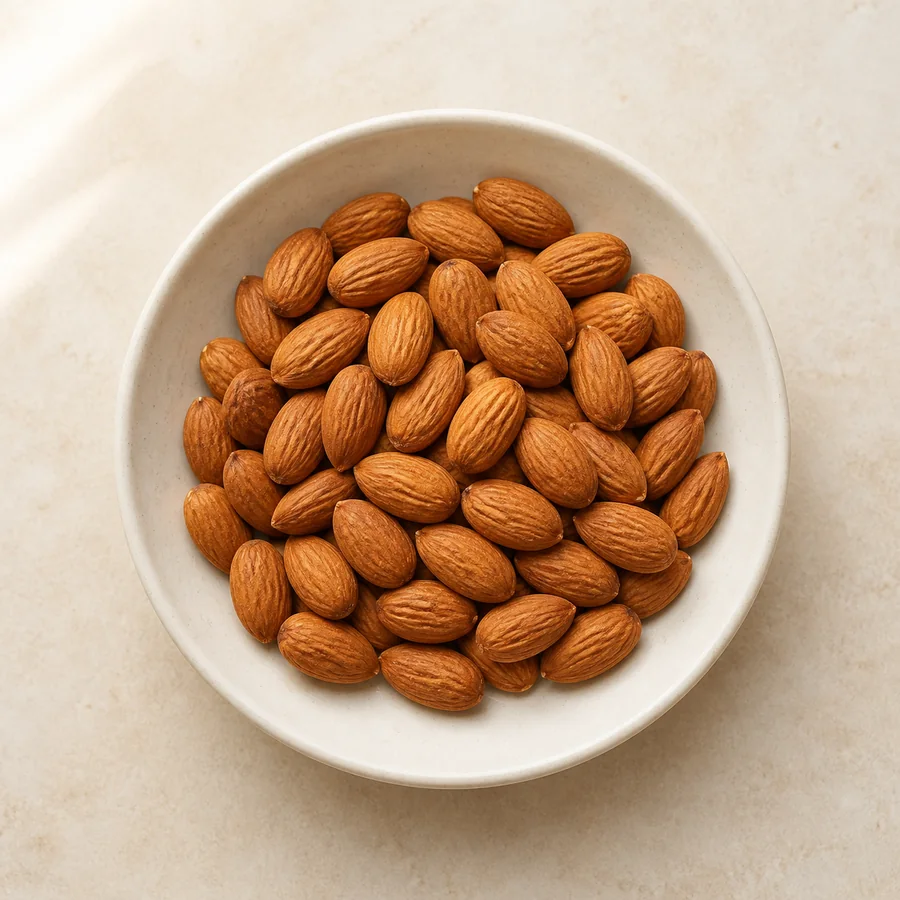
Which nondairy foods contain riboflavin?
PregNut's USDA-based food data reports these amounts per 100 g of the food as named:
| Food | Riboflavin per 100 g | Preparation in the data |
|---|---|---|
| Dry-roasted almonds | 1.19 mg | Nuts, not almond milk. |
| Scrambled egg | 0.37 mg | Cooked egg. |
| Boiled white mushrooms | 0.30 mg | Cooked mushrooms. |
| Cooked quinoa | 0.11 mg | Cooked grain, not dry quinoa. |
These are equal-weight comparisons, not typical portions. The NIH riboflavin food table lists about 0.3 mg in 1 ounce of dry-roasted almonds, 0.2 mg in one scrambled egg, and 0.2 mg in 1 cup of cooked quinoa. Its mushroom example uses grilled portabella mushrooms, a different food and preparation from PregNut's boiled white-mushroom entry. Do not transfer one mushroom number to the other.
If you eat eggs, CDC recommends cooking them until the yolks and whites are firm during pregnancy.
What about fortified cereal or plant milk?
Fortification varies by product. NIH lists fortified breakfast cereals and instant oats among riboflavin sources, but its examples are not values for every brand. Read the Nutrition Facts panel on the food you buy. The general label Daily Value is 1.3 mg, while the pregnancy recommended amount is 1.4 mg; a label's %DV is a comparison tool, not a pregnancy-specific target.
The same caution applies to plant milks. Check whether your carton lists riboflavin rather than assuming all nondairy drinks contain the same nutrients. For other nutrients that may need attention when dairy is absent, see our nondairy calcium and iodine guides.
Should I add a B2 supplement?
Start by checking the serving size and riboflavin amount on your prenatal's Supplement Facts panel. NIH identifies people who avoid dairy and vegans among groups that may have lower riboflavin intake. That is a reason to review your overall diet and supplement with your prenatal clinician, not a diagnosis from a food ranking. Our vegetarian and vegan B12 guide covers a separate B vitamin that needs its own reliable source.
Common questions
Is a handful of almonds enough riboflavin for a day?
An ounce of dry-roasted almonds contributes about 0.3 mg, according to NIH. That is part of the 1.4 mg daily pregnancy reference. Other foods, fortified products, and your prenatal may contribute too.
Is almond milk the same as almonds for B2?
No. PregNut's almond entry describes dry-roasted nuts. A drink can have a different composition and may be fortified; read its current label.
Does boiling remove all riboflavin from vegetables?
No. NIH notes that some riboflavin can be lost into cooking water, but cooked foods can still contribute. Use the value for the preparation you eat.
Sources: NIH riboflavin fact sheet and food table, NIH consumer overview, and CDC safer food choices. This guide is educational and does not replace prenatal care.