Lower-Mercury Fish During Pregnancy: A Practical Guide
Use FDA fish categories to plan lower-mercury servings each week and compare DHA in salmon, sardines, shrimp, and canned light tuna.
The FDA and EPA recommend 8 to 12 ounces (2 to 3 servings) per week of lower-mercury fish during pregnancy and breastfeeding.
Women's Obstetrics & Gynecology: Common Myths About Seafood Consumption During Pregnancy Read the original source
The short answer: Fish can be part of a pregnancy diet. FDA and EPA recommend two to three adult servings per week from their lower-mercury Best Choices category, with an adult serving defined as 4 ounces. Select a variety and cook seafood thoroughly.
How do I choose fish?
Start with the current FDA/EPA fish chart, because mercury guidance depends on the species. Salmon, sardines, shrimp, and canned light tuna are examples of Best Choices. Albacore (white) tuna is a Good Choice, for which FDA/EPA advise one serving in a week and no other fish that week. Bigeye tuna is in Choices to Avoid. The word “tuna” alone is not specific enough.
What about nutrient rankings?
PregNut's food lookup compares nutrients per 100 g; it does not rank fish for mercury or food safety. A nutrient-dense fish may still be a poor choice for pregnancy if it has high mercury. Use the FDA/EPA chart first, then compare nutrients among suitable foods.
Compare DHA in four Best Choices
These entries are in the FDA/EPA Best Choices category. PregNut's USDA-based food data reports the following DHA amounts per 100 g of the food as named:
| Food | DHA per 100 g |
|---|---|
| Cooked sockeye salmon | 0.56 g |
| Canned sardines in oil, drained | 0.50 g |
| Canned light tuna in water | 0.19 g |
| Cooked shrimp | 0.14 g |
FDA's adult serving is 4 ounces (about 113 g), so the table is a consistent comparison rather than a serving calculation. Product and preparation differences matter. PregNut's 300 mg DHA amount is an illustrative chart benchmark, not a U.S. recommended dietary allowance for DHA. None of these nutrient values measures mercury in the fish you buy.
Do canned sardines provide calcium as well as DHA?
They can when the edible bones are included. PregNut's bone-in canned Atlantic sardine entry lists 382 mg calcium per 100 g; its cooked sockeye salmon entry lists 11 mg per 100 g. The NIH calcium food table gives 325 mg in 3 ounces of canned sardines in oil with bones. That NIH serving is a different amount from PregNut's 100 g comparison. Boneless fish and different products may have different calcium amounts. See our nondairy calcium guide for more options.
If you eat little or no fish, our DHA food and supplement label guide explains how DHA differs from total fish oil and plant omega-3s.
Common questions
Can I eat smoked salmon or lox?
Mercury and preparation are separate checks. CDC lists refrigerated smoked seafood as riskier during pregnancy unless it is in a cooked dish. See our guide to lox, shelf-stable smoked fish, and cooked options for the package and serving distinctions.
Is salmon safe during pregnancy?
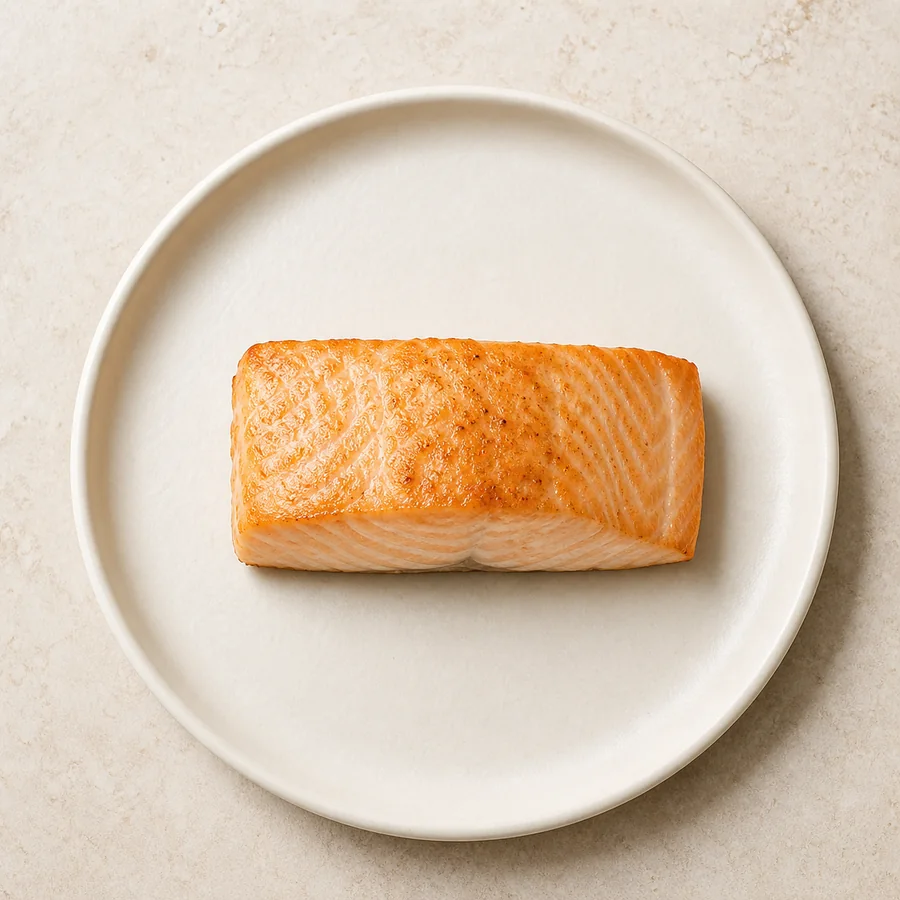
Salmon is a Best Choice on the FDA/EPA chart. Cook it thoroughly and count it toward the weekly fish guidance. Check local advisories for fish you or someone you know caught.
How often can I eat salmon or shrimp?
The FDA/EPA advice is two to three 4-ounce adult servings per week from a variety of Best Choices, rather than a separate weekly limit for salmon or shrimp. For example, one 4-ounce serving of cooked salmon and one 4-ounce serving of cooked shrimp make two servings, or 8 ounces total. A third 4-ounce Best Choice would bring the week to 12 ounces. These are examples for applying the chart, not a suggestion to eat only those two seafoods. If a fish was caught locally, check the relevant advisory; FDA gives different advice when no local advisory is available.
Shrimp is a Best Choice for mercury, but food safety is a separate check. CDC advises cooking shellfish until the flesh is pearly or white and opaque. See our shrimp guide for shrimp cocktail, prawns, and crab.
Is canned light tuna the same as albacore?
No. Canned light tuna is a Best Choice; albacore is a Good Choice with a different weekly limit. Read the can label to identify the type.
Which fish are in the highest-mercury avoid group?
The FDA/EPA chart lists king mackerel, marlin, orange roughy, shark, swordfish, Gulf of Mexico tilefish, and bigeye tuna as Choices to Avoid. The location matters for tilefish: Atlantic Ocean tilefish is a Good Choice with a different serving limit. Check the current species chart rather than relying on a generic name such as “tuna,” “mackerel,” or “tilefish.”
Can I eat raw sushi while pregnant?
The FDA food safety guidance warns that raw fish can carry parasites or bacteria. Choose thoroughly cooked seafood. Our sushi guide covers which rolls are the safer choice.
Does cooking remove mercury?
No. FDA explains that mercury is distributed through fish tissue, so cooking does not remove it. Choose lower-mercury species instead.
What if I ate a fish on the avoid list once?
FDA says a single serving is not a reason to panic; choose lower-mercury fish going forward. If you have a specific exposure concern, contact your prenatal clinician.
Related: salmon: how much and how to cook it, shrimp and crab, and lobster.
Sources: NIH calcium food table, FDA/EPA advice about eating fish, FDA fish questions and answers, and FDA pregnancy seafood safety. This guide is educational and does not replace prenatal care.