Zinc Foods During Pregnancy Without Meat
Compare zinc in roasted pumpkin seeds, cooked lentils, oats, and Greek yogurt, and learn when to review your prenatal zinc label.
Long-term supplementation can lead to deficiencies of other minerals like iron and copper.
Weill Cornell Medicine: Perinatal Nutrition Read the original source
The short answer: You can get zinc from beans, nuts, seeds, whole grains, dairy, eggs, meat, and seafood. If you avoid meat, include a variety of zinc-containing foods and check your prenatal label. The NIH pregnancy supplement review lists 11 mg per day as the zinc recommended dietary allowance during pregnancy for adults ages 19–50 and 12 mg for pregnant teens ages 14–18. A food ranking cannot tell how much zinc your body absorbs.
How much zinc do you need in pregnancy?
Zinc needs rise during pregnancy to support fetal growth. The NIH zinc fact sheet says the recommended amount is 3 mg a day more than for nonpregnant women of the same age. In NIH's summary of U.S. survey data, pregnant women ages 20 to 40 averaged about 12.4 mg a day from food alone, and 11% had total intakes from food and supplements below the estimated average requirement. NIH advises meeting nutrient needs mainly through food, with supplements useful when food alone falls short, such as during pregnancy.
If you eat animal foods, they are good sources: NIH lists about 3.8 mg in 3 ounces of roasted beef sirloin, 3.2 mg in 3 ounces of cooked blue crab, and 1.5 mg in 1.5 ounces of cheddar. Cook meat and seafood fully, as CDC advises during pregnancy.
Which meat-free foods contain zinc?
PregNut's USDA-based food data reports these amounts per 100 g of the food as named:
| Food | Zinc per 100 g | Preparation matters |
|---|---|---|
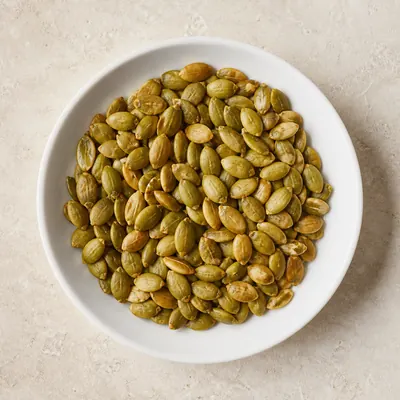
| Roasted pumpkin and squash seed kernels | 7.64 mg | This is 100 g of seeds, much more than a small handful. |
| Boiled lentils | 1.27 mg | This is cooked lentils, not dry lentils. |
| Cooked oats made with water | 1.00 mg | Fortified packaged oatmeal may differ. |
| Plain nonfat Greek yogurt | 0.52 mg | Choose pasteurized dairy products. |
These are equal-weight comparisons, not equal everyday servings. The NIH zinc food table gives useful portion examples: 1 ounce roasted pumpkin seeds has about 2.2 mg, ½ cup boiled lentils about 1.3 mg, and 1 cup cooked oats about 2.3 mg. Product and preparation differences can change the amount.
Does plant zinc count the same as zinc from meat?
Plant foods do contribute zinc, but the amount listed in a food table is not the amount absorbed. NIH explains that phytates in beans, nuts, and whole grains can reduce zinc absorption. That is one reason a vegetarian or vegan pregnancy diet deserves a review of the whole diet, not just a sum of food-table milligrams. PregNut does not estimate individual zinc absorption.
NIH notes that soaking beans, grains, and seeds in water for several hours before cooking can reduce phytate binding and make zinc more available. Fortified breakfast cereals can also supply zinc, but amounts depend on the brand and serving. Check the current package label rather than applying an older database value to the product you buy. For additional meat-free meal planning, see our vegetarian protein, iron, and vitamin B12 guides.
Should I take a zinc supplement while pregnant?
Before taking a zinc supplement while pregnant, check the serving size and zinc amount on your prenatal's Supplement Facts panel. NIH notes that most prenatal supplements include zinc. For pregnant adults, NIH lists 40 mg per day as the upper limit from food and supplements combined; for pregnant teens, the limit is 34 mg per day. More zinc is not automatically better. NIH says the effects of zinc supplementation on pregnancy outcomes are unclear, and WHO does not recommend it as part of routine pregnancy care. Discuss a separate product with your clinician, especially if you avoid animal foods or have a condition that affects absorption.
If you and your clinician decide on one, the NIH zinc fact sheet notes that common forms include zinc sulfate, zinc acetate, and zinc gluconate, and that the Supplement Facts panel lists elemental zinc, the amount that counts toward the limit. NIH also says taking 25 mg or more of iron at the same time as a zinc supplement can reduce zinc absorption, which matters if you take a separate iron supplement.
Common questions
Are pumpkin seeds enough zinc for a day?
An ounce of roasted seeds contributes about 2.2 mg, according to NIH. That is useful, but it is only part of the adult pregnancy 11 mg daily reference. Other foods and your prenatal may contribute as well.
Does a high-zinc food ranking mean I should eat that food?
No. Rankings compare nutrients, not food safety, your diet, or a suitable serving. For example, oysters can be very high in zinc, but CDC advises avoiding raw or undercooked seafood during pregnancy. Check preparation guidance before choosing a food.
Should vegetarians take more zinc than the label recommends?
Not by default. NIH notes that vegetarian and vegan diets may provide less absorbable zinc and advises discussing whether supplementation is needed with a health professional. Bring your usual foods and prenatal label to that conversation.
Sources: NIH zinc fact sheet, NIH pregnancy supplement review, and CDC safer food choices during pregnancy. This guide is educational and does not replace prenatal care.