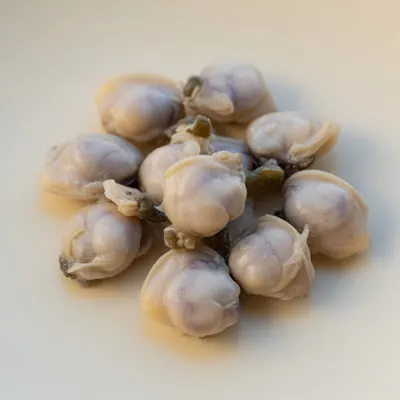
Clam
Pregnancy nutrients in 100 g
100 g gives about 434% of daily vitamin B-12, 21% of daily protein and 20% of daily DHA needed in pregnancy.
- Vitamin B-12 11.28 mcg
- Protein 14.67 g
- DHA 0.06 g
- Choline 65 mg
- Iron 1.62 mg
- Zinc 0.51 mg
- Calcium 39 mg
- Riboflavin 0.04 mg
- Potassium 46 mg
- Folate (DFE) 5 mcg
- Vitamin B-6 0.01 mg
- Vitamin D 1 IU
- Vitamin C 0 mg
Show full nutrient table
| Nutrient | In 100 g | Daily reference |
|---|---|---|
| Calcium | 39 mg | 1000 mg |
| Choline | 65 mg | 450 mg |
| DHA | 0.06 g | 0.3 g |
| Folate (DFE) | 5 mcg | 600 mcg |
| Iron | 1.62 mg | 27 mg |
| Potassium | 46 mg | 2900 mg |
| Protein | 14.67 g | 70 g |
| Riboflavin | 0.04 mg | 1.4 mg |
| Vitamin B-12 | 11.28 mcg | 2.6 mcg |
| Vitamin B-6 | 0.01 mg | 1.9 mg |
| Vitamin C | 0 mg | 85 mg |
| Vitamin D | 1 IU | 600 IU |
| Zinc | 0.51 mg | 11 mg |
Pregnancy guidance
Safe with precautionsClams are safe and highly nutritious during pregnancy when served completely cooked. They are an FDA Best Choice seafood that delivers extraordinary amounts of iron, vitamin B12, and lean protein with minimal mercury. The FDA explicitly advises against eating raw clams due to dangerous Vibrio bacteria and norovirus, requiring cooking until the shells open. Discard any clams that fail to open during steaming or boiling to ensure food safety.
How to read this
During pregnancy you need more of certain nutrients each day, like folate, iron and choline. Each bar shows how much of that daily amount 100 g of Clam provides. 100% means 100 g alone covers the whole day; smaller numbers show its share. A ✓ marks 100% or more.