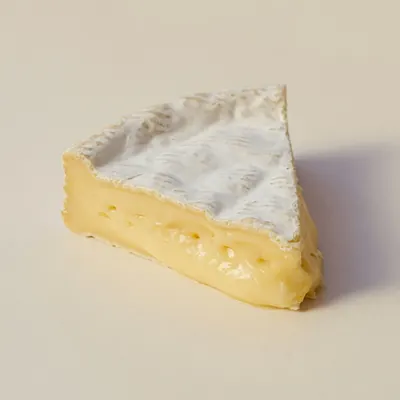
Cheese, Brie
Pregnancy nutrients in 100 g
100 g gives about 63% of daily vitamin B-12, 37% of daily riboflavin and 30% of daily protein needed in pregnancy.
- Vitamin B-12 1.65 mcg
- Riboflavin 0.52 mg
- Protein 20.75 g
- Zinc 2.38 mg
- Calcium 184 mg
- Vitamin B-6 0.23 mg
- Folate (DFE) 65 mcg
- Potassium 152 mg
- Choline 15.4 mg
- Vitamin D 20 IU
- Iron 0.5 mg
- DHA 0 g
- Vitamin C 0 mg
Show full nutrient table
| Nutrient | In 100 g | Daily reference |
|---|---|---|
| Calcium | 184 mg | 1000 mg |
| Choline | 15.4 mg | 450 mg |
| DHA | 0 g | 0.3 g |
| Folate (DFE) | 65 mcg | 600 mcg |
| Iron | 0.5 mg | 27 mg |
| Potassium | 152 mg | 2900 mg |
| Protein | 20.75 g | 70 g |
| Riboflavin | 0.52 mg | 1.4 mg |
| Vitamin B-12 | 1.65 mcg | 2.6 mcg |
| Vitamin B-6 | 0.23 mg | 1.9 mg |
| Vitamin C | 0 mg | 85 mg |
| Vitamin D | 20 IU | 600 IU |
| Zinc | 2.38 mg | 11 mg |
Pregnancy guidance
AvoidBrie cheese should be avoided during pregnancy unless it is cooked until steaming hot and bubbling throughout. Soft surface-ripened cheeses have higher moisture and lower acidity, allowing Listeria monocytogenes bacteria to thrive even if made from pasteurized milk. The CDC and FDA emphasize that unheated soft cheeses pose serious risks of miscarriage and preterm labor. You can safely enjoy Brie when it is baked completely to an internal temperature of 165°F.
Sources: CDC Food Safety · FDA Food Safety for Moms-to-Be
How to read this
During pregnancy you need more of certain nutrients each day, like folate, iron and choline. Each bar shows how much of that daily amount 100 g of Cheese, Brie provides. 100% means 100 g alone covers the whole day; smaller numbers show its share. A ✓ marks 100% or more.