Milk chocolate
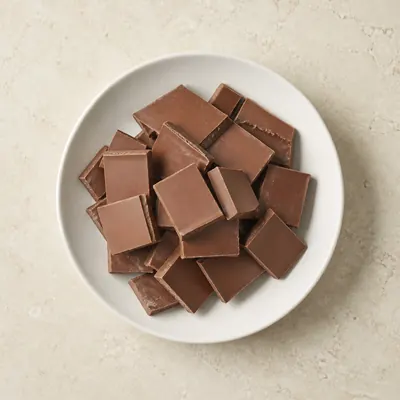
Pregnancy nutrients in 100 g
100 g gives about 29% of daily vitamin B-12, 21% of daily zinc and 21% of daily riboflavin needed in pregnancy.
- Vitamin B-12 0.75 mcg
- Zinc 2.3 mg
- Riboflavin 0.29 mg
- Calcium 189 mg
- Potassium 372 mg
- Protein 7.65 g
- Choline 46.1 mg
- Iron 2.35 mg
- Folate (DFE) 11 mcg
- Vitamin B-6 0.03 mg
- DHA 0 g
- Vitamin C 0 mg
- Vitamin D 0 IU
Show full nutrient table
| Nutrient | In 100 g | Daily reference |
|---|---|---|
| Calcium | 189 mg | 1000 mg |
| Choline | 46.1 mg | 450 mg |
| DHA | 0 g | 0.3 g |
| Folate (DFE) | 11 mcg | 600 mcg |
| Iron | 2.35 mg | 27 mg |
| Potassium | 372 mg | 2900 mg |
| Protein | 7.65 g | 70 g |
| Riboflavin | 0.29 mg | 1.4 mg |
| Vitamin B-12 | 0.75 mcg | 2.6 mcg |
| Vitamin B-6 | 0.03 mg | 1.9 mg |
| Vitamin C | 0 mg | 85 mg |
| Vitamin D | 0 IU | 600 IU |
| Zinc | 2.3 mg | 11 mg |
Pregnancy guidance
LimitMilk chocolate should be limited during pregnancy due to its high sugar and saturated fat content. It supplies small amounts of calcium and riboflavin from milk solids, but refined sugar makes up the majority of every bar. In addition, milk chocolate contains modest amounts of caffeine that should be tracked alongside daily totals. Savor a small individual square after meals rather than eating entire candy bars.
Sources: USDA Dietary Guidelines · ACOG
How to read this
During pregnancy you need more of certain nutrients each day, like folate, iron and choline. Each bar shows how much of that daily amount 100 g of Milk chocolate provides. 100% means 100 g alone covers the whole day; smaller numbers show its share. A ✓ marks 100% or more.