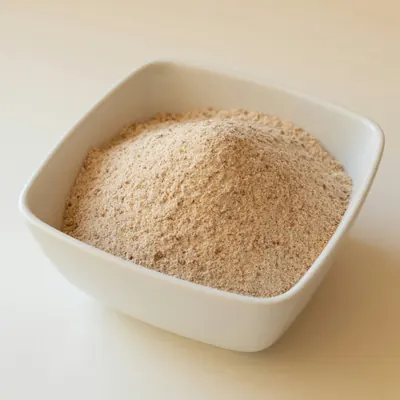
Wheat flour, Whole-grain
Pregnancy nutrients in 100 g
100 g gives about 24% of daily zinc, 21% of daily vitamin B-6 and 19% of daily protein needed in pregnancy.
- Zinc 2.6 mg
- Vitamin B-6 0.4 mg
- Protein 13.21 g
- Iron 3.6 mg
- Potassium 363 mg
- Riboflavin 0.16 mg
- Folate (DFE) 44 mcg
- Choline 31.2 mg
- Calcium 34 mg
- DHA 0 g
- Vitamin B-12 0 mcg
- Vitamin C 0 mg
- Vitamin D 0 IU
Show full nutrient table
| Nutrient | In 100 g | Daily reference |
|---|---|---|
| Calcium | 34 mg | 1000 mg |
| Choline | 31.2 mg | 450 mg |
| DHA | 0 g | 0.3 g |
| Folate (DFE) | 44 mcg | 600 mcg |
| Iron | 3.6 mg | 27 mg |
| Potassium | 363 mg | 2900 mg |
| Protein | 13.21 g | 70 g |
| Riboflavin | 0.16 mg | 1.4 mg |
| Vitamin B-12 | 0 mcg | 2.6 mcg |
| Vitamin B-6 | 0.4 mg | 1.9 mg |
| Vitamin C | 0 mg | 85 mg |
| Vitamin D | 0 IU | 600 IU |
| Zinc | 2.6 mg | 11 mg |
Pregnancy guidance
Safe with precautionsWhole-grain wheat flour is safe with precautions during pregnancy and must be thoroughly cooked or baked. It supplies natural dietary fiber to prevent constipation, along with plant protein, vitamin B6, and zinc. Like all raw flours, it must never be eaten uncooked due to potential bacterial contamination on raw grains. Use it to bake nutritious whole-wheat breads, muffins, or homemade pancakes.
Sources: CDC Food Safety · USDA Dietary Guidelines for Americans
How to read this
During pregnancy you need more of certain nutrients each day, like folate, iron and choline. Each bar shows how much of that daily amount 100 g of Wheat flour, Whole-grain provides. 100% means 100 g alone covers the whole day; smaller numbers show its share. A ✓ marks 100% or more.