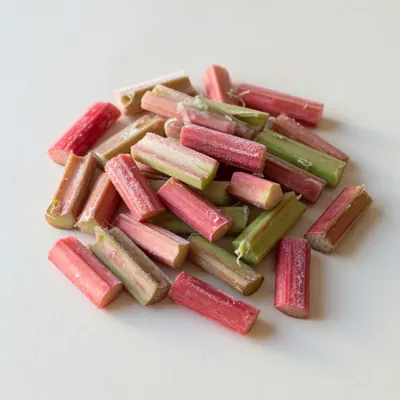
Rhubarb, Frozen, Uncooked
Pregnancy nutrients in 100 g
100 g gives about 19% of daily calcium, 6% of daily vitamin C and 4% of daily potassium needed in pregnancy.
- Calcium 194 mg
- Vitamin C 4.8 mg
- Potassium 108 mg
- Riboflavin 0.02 mg
- Choline 6.1 mg
- Folate (DFE) 8 mcg
- Iron 0.29 mg
- Vitamin B-6 0.02 mg
- Zinc 0.1 mg
- Protein 0.55 g
- DHA 0 g
- Vitamin B-12 0 mcg
- Vitamin D 0 IU
Show full nutrient table
| Nutrient | In 100 g | Daily reference |
|---|---|---|
| Calcium | 194 mg | 1000 mg |
| Choline | 6.1 mg | 450 mg |
| DHA | 0 g | 0.3 g |
| Folate (DFE) | 8 mcg | 600 mcg |
| Iron | 0.29 mg | 27 mg |
| Potassium | 108 mg | 2900 mg |
| Protein | 0.55 g | 70 g |
| Riboflavin | 0.02 mg | 1.4 mg |
| Vitamin B-12 | 0 mcg | 2.6 mcg |
| Vitamin B-6 | 0.02 mg | 1.9 mg |
| Vitamin C | 4.8 mg | 85 mg |
| Vitamin D | 0 IU | 600 IU |
| Zinc | 0.1 mg | 11 mg |
Pregnancy guidance
Safe with precautionsFrozen rhubarb stalks are safe during pregnancy when thoroughly cooked. The tart stalks provide dietary calcium, potassium, and vitamin C, but they must be heated before eating to soften tough fibers. Never consume rhubarb leaves because they contain toxic concentrations of oxalic acid that cause kidney damage. Simmer frozen rhubarb stalks with strawberries and a touch of honey for a safe compote.
How to read this
During pregnancy you need more of certain nutrients each day, like folate, iron and choline. Each bar shows how much of that daily amount 100 g of Rhubarb, Frozen, Uncooked provides. 100% means 100 g alone covers the whole day; smaller numbers show its share. A ✓ marks 100% or more.