How to Read a Prenatal Vitamin Label: Folic Acid, Iron, Iodine, and Choline
Learn to read prenatal serving size, folate DFE versus folic acid, percent Daily Value, iron, iodine, and choline on a Supplement Facts label.
If you take a gummy vitamin, look to see if it has iron.
Baylor College of Medicine: Why Prenatal Vitamins Matter Read the original source
The short answer: Start with the serving size on the Supplement Facts panel, then check folic acid, iron, iodine, and choline. A prenatal is a supplement to food, and formulations differ. ACOG's healthy eating guide and NIH's pregnancy supplement review are useful references to discuss with your clinician.
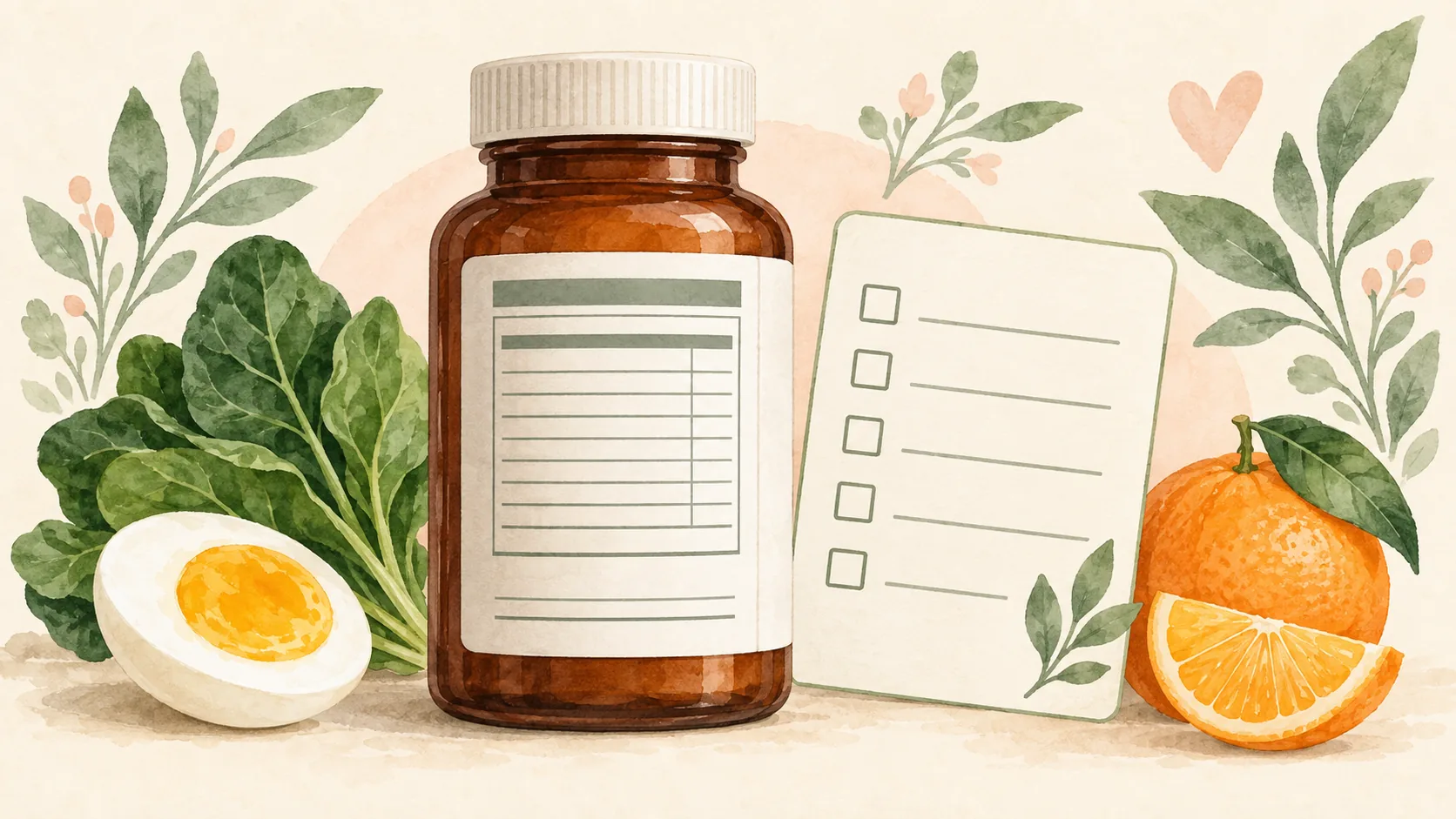
A quick label check
- Serving size: Does the listed amount require one tablet, two gummies, or several capsules?
- Folic acid: Look for an amount in parentheses after Folate. The label lists total folate in mcg DFE, but the parenthetical mcg folic acid is the number to compare with ACOG's recommendation of at least 400 mcg of folic acid in a daily prenatal around conception and early pregnancy. If no folic acid amount appears, do not assume the DFE amount is folic acid. See our folate and folic acid guide.
- Iron: Check whether it is present, especially in gummies. ACOG lists 27 mg per day as the pregnancy requirement; whether you need extra iron depends on your diet and blood work. See iron food pairings.
- Iodine: NIH lists 220 micrograms per day as the pregnancy recommended dietary allowance. Dairy, eggs, seafood, and iodized salt may contribute. Check whether the prenatal includes iodine; not every salt is iodized. See iodine without dairy or seafood if you avoid those foods.
- Choline: NIH lists 450 mg per day as the pregnancy adequate intake. Some prenatals omit choline or contain little. See choline food ideas.
- Calcium and vitamin D: Check both amounts; a prenatal may have less calcium than you expect. Compare nondairy calcium foods and vitamin D foods with what you usually eat.
- Vitamin B12: If you eat little or no animal food, compare the prenatal's B12 amount with your fortified-food labels and discuss your plan with your clinician. See B12 during vegetarian or vegan pregnancy.
- DHA: If the product advertises omega-3s, find the DHA amount separately from fish oil or total omega-3s. See DHA when you eat little or no fish.
- Vitamin B6: Note its amount before considering a separate B6 product for nausea. The usual pregnancy nutrient reference and nausea treatment are different questions; see our B6 food and morning sickness guide.
- Vitamin A: Check whether it comes from preformed vitamin A (retinol or a retinyl ester), beta-carotene, or both. The safety limit in pregnancy applies to preformed vitamin A. See our vitamin A food and label guide before adding another product.
- Magnesium: Note the amount in your prenatal before considering a separate supplement. The upper limit for supplemental magnesium does not include magnesium naturally present in food; see our magnesium food guide.
What do mcg DFE and %DV mean on a prenatal label?
The FDA explains that mcg DFE (dietary folate equivalents) accounts for the different absorption of food folate and added folic acid. If a label reads Folate 680 mcg DFE (400 mcg folic acid), the two numbers describe different measures of the folate in that serving. For the folic acid check above, read the 400 mcg in parentheses, not the 680 mcg DFE.
The % Daily Value (%DV) shows how much one labeled serving contributes to a reference Daily Value. Check which population the label names; a prenatal may show values for pregnant or lactating people. The percentage is not an individualized prescription, and it may not match the pregnancy intake figures above. Compare the amount per serving with your food intake and your clinician's advice rather than choosing a prenatal by the highest percentages alone. FDA's Daily Value guide explains how %DV is calculated.
What should I ask at a prenatal visit?
Bring the prenatal's Supplement Facts label and a list of all other vitamins, supplements, and medicines you take, including their doses. FDA recommends bringing this list to healthcare visits; ACOG advises discussing prenatal supplement choices with your obstetric clinician. Useful questions include:
- Does this serving contain the folic acid amount and form you recommend for me?
- Do my diet, health history, or lab results change what I need from a prenatal or an additional supplement?
- Could this prenatal overlap with another product I take, or interact with a medicine?
- If I have trouble taking this product, what alternative would you recommend?
These questions turn a label comparison into a discussion about your own care. Do not double the prenatal serving or add a separate nutrient simply because one number looks low.
Common questions
Is a prenatal with more of every nutrient better?
No. More is not automatically better, and stacking products can raise the risk of excessive intake. Protein powders can carry added vitamins and minerals too; our protein powder label checklist shows how to compare one with your prenatal. Ask your prenatal clinician about an additional supplement before taking one.
What if my gummy has no iron?
Check the full label. If it has no iron, discuss your food intake and lab results with your clinician rather than adding iron by default.
What if my prenatal has no iodine or choline?
Use the label as a conversation starter. Food choices and any added supplement should reflect your diet, health history, and clinician's guidance.
Can I replace my prenatal with a food tracker?
No. A tracker helps compare foods; it does not assess your medical needs or confirm that a supplement is unnecessary. Use PregNut's food lookup and weekly guide alongside prenatal care.
Sources: ACOG healthy eating during pregnancy, NIH pregnancy supplement review, NIH iodine, NIH choline, FDA folate labeling, FDA Daily Values, and FDA advice on discussing supplements and medicines. This guide is educational and does not replace prenatal care.