Apricots, Dried, Uncooked
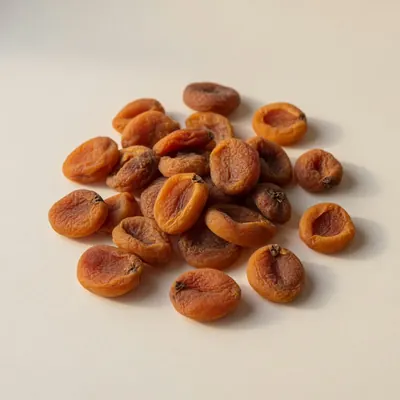
Pregnancy nutrients in 100 g
100 g gives about 40% of daily potassium, 10% of daily iron and 7% of daily vitamin B-6 needed in pregnancy.
- Potassium 1162 mg
- Iron 2.66 mg
- Vitamin B-6 0.14 mg
- Calcium 55 mg
- Riboflavin 0.07 mg
- Protein 3.39 g
- Zinc 0.39 mg
- Choline 13.9 mg
- Folate (DFE) 10 mcg
- Vitamin C 1 mg
- DHA 0 g
- Vitamin B-12 0 mcg
- Vitamin D 0 IU
Show full nutrient table
| Nutrient | In 100 g | Daily reference |
|---|---|---|
| Calcium | 55 mg | 1000 mg |
| Choline | 13.9 mg | 450 mg |
| DHA | 0 g | 0.3 g |
| Folate (DFE) | 10 mcg | 600 mcg |
| Iron | 2.66 mg | 27 mg |
| Potassium | 1162 mg | 2900 mg |
| Protein | 3.39 g | 70 g |
| Riboflavin | 0.07 mg | 1.4 mg |
| Vitamin B-12 | 0 mcg | 2.6 mcg |
| Vitamin B-6 | 0.14 mg | 1.9 mg |
| Vitamin C | 1 mg | 85 mg |
| Vitamin D | 0 IU | 600 IU |
| Zinc | 0.39 mg | 11 mg |
Pregnancy guidance
RecommendedDried uncooked apricots are recommended during pregnancy as an iron-rich snack. They deliver substantial amounts of potassium, non-heme iron, and dietary fiber that help prevent pregnancy anemia and constipation. The USDA suggests combining dried fruits with water to keep digestion regular. Eat a small handful daily alongside vitamin C foods to improve plant iron absorption.
How to read this
During pregnancy you need more of certain nutrients each day, like folate, iron and choline. Each bar shows how much of that daily amount 100 g of Apricots, Dried, Uncooked provides. 100% means 100 g alone covers the whole day; smaller numbers show its share. A ✓ marks 100% or more.