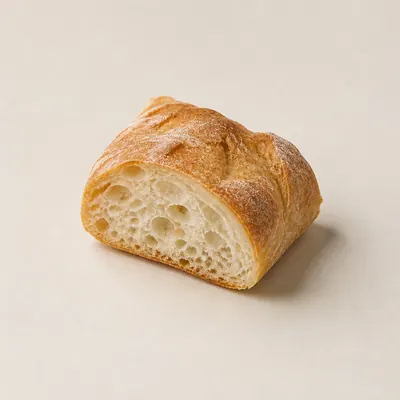
Bread, Italian
Pregnancy nutrients in 100 g
100 g gives about 51% of daily folate, 21% of daily riboflavin and 13% of daily protein needed in pregnancy.
- Folate (DFE) 304 mcg
- Riboflavin 0.29 mg
- Protein 8.8 g
- Iron 2.94 mg
- Zinc 0.86 mg
- Calcium 78 mg
- Potassium 110 mg
- Choline 14.6 mg
- Vitamin B-6 0.04 mg
- DHA 0 g
- Vitamin B-12 0 mcg
- Vitamin C 0 mg
- Vitamin D 0 IU
Show full nutrient table
| Nutrient | In 100 g | Daily reference |
|---|---|---|
| Calcium | 78 mg | 1000 mg |
| Choline | 14.6 mg | 450 mg |
| DHA | 0 g | 0.3 g |
| Folate (DFE) | 304 mcg | 600 mcg |
| Iron | 2.94 mg | 27 mg |
| Potassium | 110 mg | 2900 mg |
| Protein | 8.8 g | 70 g |
| Riboflavin | 0.29 mg | 1.4 mg |
| Vitamin B-12 | 0 mcg | 2.6 mcg |
| Vitamin B-6 | 0.04 mg | 1.9 mg |
| Vitamin C | 0 mg | 85 mg |
| Vitamin D | 0 IU | 600 IU |
| Zinc | 0.86 mg | 11 mg |
Pregnancy guidance
Safe with precautionsItalian bread is safe to include in a balanced prenatal diet as an easy-to-digest carbohydrate. Commercial loaves are fortified with folic acid and iron, helping meet higher maternal red blood cell requirements. The USDA advises choosing whole grain alternatives whenever possible to obtain more fiber. Toasting your slices and pairing them with olive oil and tomato slices enhances both flavor and antioxidant intake.
Sources: USDA Dietary Guidelines · ACOG
How to read this
During pregnancy you need more of certain nutrients each day, like folate, iron and choline. Each bar shows how much of that daily amount 100 g of Bread, Italian provides. 100% means 100 g alone covers the whole day; smaller numbers show its share. A ✓ marks 100% or more.