Bread, Whole-wheat
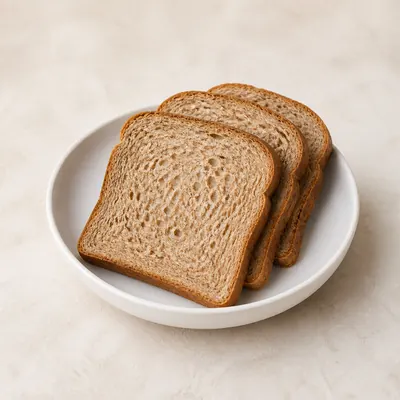
Pregnancy nutrients in 100 g
100 g gives about 18% of daily protein, 16% of daily calcium and 16% of daily zinc needed in pregnancy.
- Protein 12.45 g
- Calcium 161 mg
- Zinc 1.77 mg
- Riboflavin 0.16 mg
- Vitamin B-6 0.21 mg
- Iron 2.47 mg
- Potassium 254 mg
- Folate (DFE) 42 mcg
- Choline 27.2 mg
- DHA 0 g
- Vitamin B-12 0 mcg
- Vitamin C 0 mg
- Vitamin D 0 IU
Show full nutrient table
| Nutrient | In 100 g | Daily reference |
|---|---|---|
| Calcium | 161 mg | 1000 mg |
| Choline | 27.2 mg | 450 mg |
| DHA | 0 g | 0.3 g |
| Folate (DFE) | 42 mcg | 600 mcg |
| Iron | 2.47 mg | 27 mg |
| Potassium | 254 mg | 2900 mg |
| Protein | 12.45 g | 70 g |
| Riboflavin | 0.16 mg | 1.4 mg |
| Vitamin B-12 | 0 mcg | 2.6 mcg |
| Vitamin B-6 | 0.21 mg | 1.9 mg |
| Vitamin C | 0 mg | 85 mg |
| Vitamin D | 0 IU | 600 IU |
| Zinc | 1.77 mg | 11 mg |
Pregnancy guidance
RecommendedWhole-wheat bread is strongly recommended as a staple grain choice during pregnancy. It provides high levels of dietary fiber, zinc, and iron to prevent gestational constipation and support maternal plasma expansion. The USDA Dietary Guidelines recommend making at least half of your daily grain choices 100 percent whole grain. Use two slices for a hearty lunch sandwich packed with cooked lean protein and fresh, washed vegetables.
Sources: USDA Dietary Guidelines · ACOG
How to read this
During pregnancy you need more of certain nutrients each day, like folate, iron and choline. Each bar shows how much of that daily amount 100 g of Bread, Whole-wheat provides. 100% means 100 g alone covers the whole day; smaller numbers show its share. A ✓ marks 100% or more.